Best sports watch 2026, picks and comparison
The right balance depends on useful features, battery life and size. The Best sports watch for you supports your regular workouts while fitting into your everyday life.
Prices recorded at retailers are for guidance only: they may have changed since. The current price is the one shown by the retailer. No price is shown for models sold exclusively on Amazon. Amounts converted from reference prices in euros using a dated exchange rate.
How we picked these models
- 2 selected models because they have the feature “Sports” according to data published by manufacturers and retailers.
- View methodology →
- No brand pays to appear in this selection or to rank higher.
Why look for the best sports watch for everyday use?
Why track your activity beyond workouts
The best sports watch is the one whose information helps you make practical decisions. Its value goes beyond recording an outing. An activity history also helps you identify consistent periods, less active days and changes in pace. This gives you reference points for adjusting your goals to your daily life.
This approach suits people returning to exercise as well as athletes who want to organise their week more effectively. On the Polar Ignite 2, the stated tracking features include steps, calories and active time, with activity monitoring 24 h/24 and 7 days/7. These indicators offer complementary perspectives without guaranteeing progress on their own.
- To ease back into exercise, focus on consistency before adding more goals.
- To balance your week, consider your workouts alongside days that are already busy.
- To keep useful reference points, prioritise indicators you understand and actually check.
If you are also considering the “Best smartwatch” selection, ask yourself whether everyday features or sports guidance matter more to you. The right choice depends on that priority.
How personalised guidance can support your motivation
Having data does not always mean knowing what to do next. Workout suggestions can provide structure, especially when you are short of ideas or looking to establish a routine. The Polar Ignite 2 offers FitSpark, a personalised daily training guide.
The aim is to reduce uncertainty when planning a workout. This guidance may suit someone who wants direction without having to plan their entire exercise schedule alone. It remains a decision-making aid, however. A recommendation does not oblige you to exercise if you are tired, unavailable or unwell.
To set your budget, start by considering essential features. An entry-level watch may meet basic tracking needs. Moving up the range makes sense if you want specific features, such as the offline mapping or solar charging offered by the Suunto Vertical Titanium Solar. Adding features without a plan to use them does not make your choice more suitable.
Why consider sleep and recovery together
A workout is part of a wider picture that also includes your nights and rest periods. Reviewing this information together helps put a drop in motivation or an inconsistent week into context. The Polar Ignite 2 lists automatic sleep and recovery tracking, which can provide a starting point for this observation.
The aim is to identify personal trends without treating every indicator as an instruction. A watch does not make a diagnosis, and its readings do not replace how you feel or medical advice when needed. Nor can they promise injury prevention.
The selection on this page helps you move from these needs to suitable models. Compare their documented features, limitations and the information to check so you can choose the watch that suits your activities.
How do you choose a sports watch that suits your needs?
The best watch for sports is the one that suits your main activity, with features you will actually use. Based on an analysis of their specifications, these 4 models meet different needs. To choose, start with your usual workouts, then check navigation, battery life, size and water resistance.
Which watch should you choose for your main activity
Identify your priority before comparing features. Everyday tracking, workout guidance and hiking require different tools.
| Model | Listed price | Weight | Battery life | Special feature | Connectivity technology |
|---|---|---|---|---|---|
| Xiaomi Watch S3 | N/A | 44 g | 486 mAh | GPS, personalised activity tracking, phone calls, touchscreen | Bluetooth |
| Polar Ignite 2 | Check price with the retailer | 35g | N/A | Colour touchscreen (IPS TFT) with gesture activation | GPS |
| Suunto Vertical Titanium Solar | Check price with the retailer | N/A | 30 days 60 days with charging | N/A | N/A |
| Suunto 9 Peak | Check price with the retailer | {{ slotScope.product. ProductWeightGrams }} g / {{ slotScope.product. ProductWeightOunces }} oz | N/A | Waterproof, altitude tracking | Bluetooth |
- Xiaomi Watch S3 is best suited to those looking for versatile smart features. It combines GPS, personalised activity tracking and phone calls. It deserves your attention if you are deciding between a sports watch and a “Best smartwatch”.
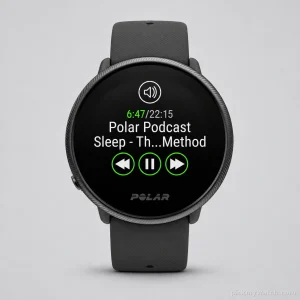
- Polar Ignite 2 stands out for its guidance. FitSpark provides personalised daily workout guidance, while automatic sleep and recovery tracking lets you view these indicators together.
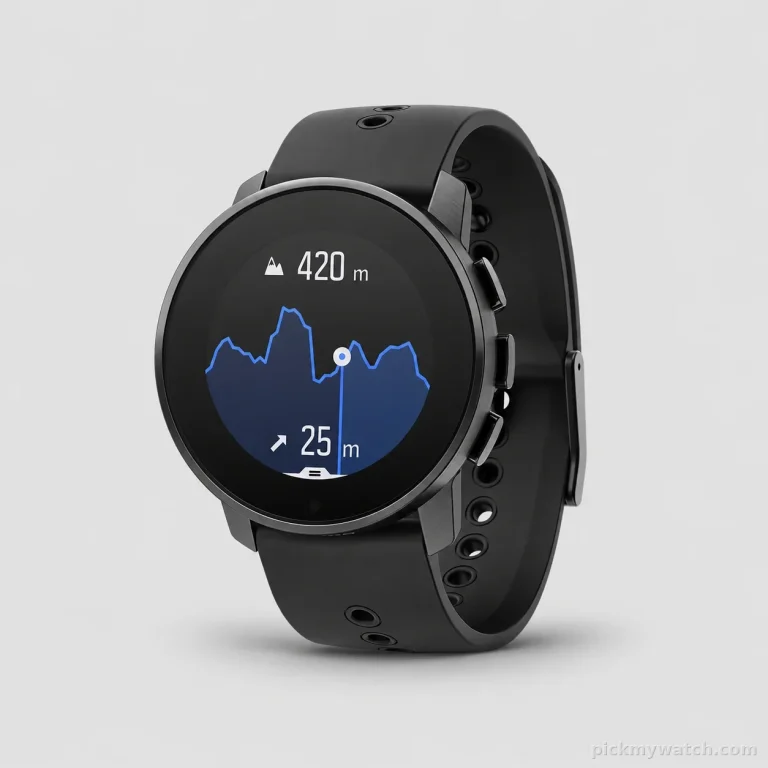
- Suunto Vertical Titanium Solar offers the most relevant hiking navigation features in this selection, with offline maps, a compass and a barometric altimeter.
- Suunto 9 Peak is aimed at those looking for multisport capabilities. Its numerous sports modes and altitude tracking make it worth considering, but several technical details need confirmation.
These recommendations do not represent a universal ranking. For regular running, check above all that the metrics and workout planning options meet your training needs.
Which GPS and navigation features should you prioritise
Having GPS does not demonstrate its accuracy. Nor does it guarantee mapping or route guidance. The available specifications do not allow these watches to be compared on the accuracy of their recorded routes.
For your usual routes, start by checking the recording features you need. For exploring trails, the Suunto Vertical Titanium Solar's offline maps offer a more concrete advantage. Its compass and barometric altimeter round out these features.
Before buying, check the options for planning and importing routes. A large number of sports modes does not prove greater measurement accuracy or more comprehensive navigation.
How to compare claimed battery life
Always distinguish between everyday use and GPS recording. A battery life figure quoted for everyday use does not tell you how long the battery will last on a long outing.
Xiaomi claims up to 15 days for the Watch S3. Suunto claims up to 60 days of everyday use for the Vertical Titanium Solar. These maximum figures are not comparable GPS battery life figures. For solar charging, check the required exposure conditions and the expected benefit in your environment.
GPS battery life figures are missing here, preventing a consistent comparison. If you are planning extended outings, ask for the battery life for your intended recording mode, along with the features disabled to achieve it. Do not choose solely on the basis of the advertised maximum.
Which size and controls should you choose
Weight and dimensions help you gauge bulk, but do not establish comfort. The Polar Ignite 2 is listed at 35 g, compared with 44 g for the Xiaomi Watch S3. Also check the strap's adjustment range and whether it fits your wrist circumference.
The Polar combines 1 button and a touchscreen. The Xiaomi also has a touchscreen. Before choosing, check how the controls work during a workout, particularly when starting, pausing and ending a recording.
For the Suunto 9 Peak, some dimension and material specifications are unusable, and the display information is inconsistent. Have these details confirmed for the exact model. A questionable dimension should not determine your purchase.
How to check water protection
A stated depth rating alone does not mean swimming is permitted. Check which activities the manufacturer explicitly allows for your chosen model.
The Polar Ignite 2 also includes restrictive wording relating to handwashing.
The Suunto models list water resistance up to 100 m. You still need to check the restrictions for each activity. For swimming, get clear confirmation before buying instead of interpreting a depth rating yourself.
How to set your budget without paying for unnecessary features
Compare entry-level, mid-range and high-end options based on your essential features. More features are only useful if they meet an identified need.
Mapping, solar charging or materials may justify moving up the range. For daily tracking, calls and occasional workouts, they are not automatically priorities. Write down your requirements, eliminate models that do not meet them, then compare the remaining models.
Mistakes to avoid
- Confusing built-in GPS with demonstrated accuracy and navigation.
- Comparing battery life figures measured under different conditions.
- Assuming a stated depth rating means a watch is suitable for swimming.
- Choosing based on the number of sports modes without checking useful features.
- Ignoring a contradictory specification before ordering.
Key takeaways
Start with your activities, then check any deal-breakers. The Xiaomi prioritises connected versatility, the Polar guidance, the Vertical navigation and the 9 Peak multisport use. Missing information warrants checking, especially when your outings depend on it.
What should you ask yourself before choosing a sports watch?
Do you need to compare the 10 best sports watches to choose the right one?
No, a selection suited to your sport is more useful than a ranking of 10 models. To find the best sports watch, start with your essential needs: training guidance, navigation or connected features. A search for “Best smartwatch” may reflect different priorities. Then compare the documented features and missing information, particularly battery life in GPS mode.
What are the 3 best sports watch brands?
There is no ideal trio of brands for every athlete. Among the models in this selection, Polar stands out for the personalised guidance advertised for the Ignite 2, Suunto for the navigation tools on the Vertical Titanium Solar and Xiaomi for the versatile connected features of the Watch S3. These differences apply to these specific models and are not enough to rank their brands as a whole.
Is a sports watch compatible with every phone?
No, you need to check compatibility with your phone and its operating system version. The Suunto Vertical Titanium Solar is advertised as compatible with Android and iOS, but the minimum versions still need to be confirmed. Bluetooth connectivity does not guarantee access to every feature. Even a “Best watch for women” selection needs to meet this requirement: check the required app, synchronisation and any restrictions before choosing.
Can you keep your activity history when switching brands?
You may be able to transfer some of your history, but keeping it all is not guaranteed. Before switching brands, check the export options in your current app and the import options in the new one. Workouts, sleep and recovery metrics may be handled differently. Back up your activities and check what will actually transfer before deleting your old account.
Does a sports watch require a subscription?
A subscription is not always necessary, but you need to check the terms of each associated service. Distinguish between features built into the watch, those available in the app and any paid extras. Offline maps are advertised as free on the Suunto Vertical Titanium Solar. This statement does not establish the terms of every associated service or those of other models.
How can you protect the personal data recorded by a sports watch?
Start by limiting app permissions and the visibility of your activities. Routes can reveal your habits or home address: check your sharing settings before posting anything. Protect your account with a unique password and enable additional authentication if available. Also check the options for exporting and deleting data, and revoking access granted to external services.
What should you check about updates and software support?
Check the manufacturer's commitments on updates, app compatibility and the availability of assistance. The operating system name, such as HyperOS 2.0 advertised for the Xiaomi Watch S3, does not tell you how long support will last. Ask whether a support period has been announced and check the patch history. Do not assume that a missing feature will be added later.