Best watch with a heart rate monitor 2026, picks and comparison
The relevance of heart rate data to your activities matters more than the number of features, because the Best heart rate monitor watch should primarily help you understand the intensity of your efforts.
Prices recorded at retailers are for guidance only: they may have changed since. The current price is the one shown by the retailer. No price is shown for models sold exclusively on Amazon. Amounts converted from reference prices in euros using a dated exchange rate.
How we picked these models
- 2 selected models because they have the feature “Heart rate monitor” according to data published by manufacturers and retailers.
- View methodology →
- No brand pays to appear in this selection or to rank higher.
Why choose a heart rate monitor watch?
Understanding what heart rate adds to your pace and distance
Your pace tells you how fast you are moving. Your heart rate provides additional insight into the intensity of your effort. The same outing can feel easy or demanding depending on fatigue, heat or terrain. Looking at these details together helps explain why your usual pace sometimes takes more energy.
A heart rate monitor watch makes this indicator accessible during your activity. Whether you are returning to exercise, heading out regularly or following a structured training plan, it can help you identify when your effort is too intense for your goal. It supports your judgement without replacing how you feel or advice tailored to your situation.
- For beginners, it provides an additional reference point for learning to moderate effort.
- For regular runners, it helps connect pace, route and heart rate response.
- For those who vary their activities, it provides a common indicator that needs to be interpreted for each activity.
The best heart rate monitor watch is therefore the one that meets your tracking needs. GPS or a wide range of sports features alone does not establish the accuracy of the heart rate sensor.
Putting your progress into perspective
A single measurement tells you little. A history becomes more useful when you compare sessions completed in similar conditions. On a familiar route, comparing your pace, heart rate and how you feel can help you observe changes. However, a difference alone does not prove an improvement or decline in fitness.
Sleep, stress, temperature or temporary fatigue can affect your heart rate response. The aim is to look for a consistent trend without treating every variation as a warning. Recovery and sleep indicators, when available, call for the same caution.
This approach suits people who enjoy understanding their exercise habits and adjusting them. It will be less useful if checking numbers becomes a source of worry. A sports tracking watch does not provide a diagnosis and a reassuring reading should not lead you to ignore a symptom.
Building consistency in your exercise routine
Reviewing your history makes your consistency visible. You can identify periods when your activity level suits you, then set realistic goals. The value lies in that continuity, more than in accumulating features or promises of performance.
Your choice of product tier should reflect your needs. Entry-level models may suit those seeking simplicity, provided you check their heart rate features. Mid-range models deserve consideration if you want more structured support. High-end models are most worthwhile when their additional features genuinely serve your outings.
The “Best smartwatch” and “Best sports watch” guides help broaden the comparison if your priorities go beyond heart rate tracking. To make your choice here, continue with the selection on this page, which highlights documented heart rate features, useful strengths for your activities and points to check before buying.
How do you choose the best heart rate monitor watch?
The best watch with a heart rate monitor is the one that suits your activities and provides actionable information. After analysing the specifications, start with the documented heart rate tracking capabilities, then consider sports features, battery life and comfort. A feature-rich watch alone does not guarantee more accurate heart rate measurements.
Which watches to consider based on your priorities
| Model | Recorded price | Weight | Special feature | Connectivity technology |
|---|---|---|---|---|
| Xiaomi Watch S3 | N/A | 44 g | GPS, personalised activity tracking, phone calls, touchscreen | Bluetooth |
| Polar Ignite 2 | Check price with the retailer | 35g | Colour touchscreen (IPS TFT) with gesture activation | GPS |
| Suunto Vertical Titanium Solar | Check price with the retailer | N/A | N/A | N/A |
| Suunto 9 Peak | Check price with the retailer | {{ slotScope.product. ProductWeightGrams }} g / {{ slotScope.product. ProductWeightOunces }} oz | Waterproof, altitude tracking | Bluetooth |
| Coros Vertix 2 WVTX2-SVR | Check the price with the retailer | n/a | n/a | n/a |
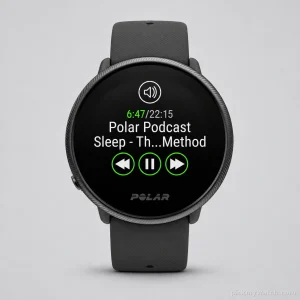
The Polar Ignite 2 is an option for structuring your training. Heart rate tracking is mentioned, along with daily FitSpark guidance and sleep and recovery tracking. It is worth considering if you want guidance to organise your sessions. These features do not, however, establish that the sensor is more accurate.
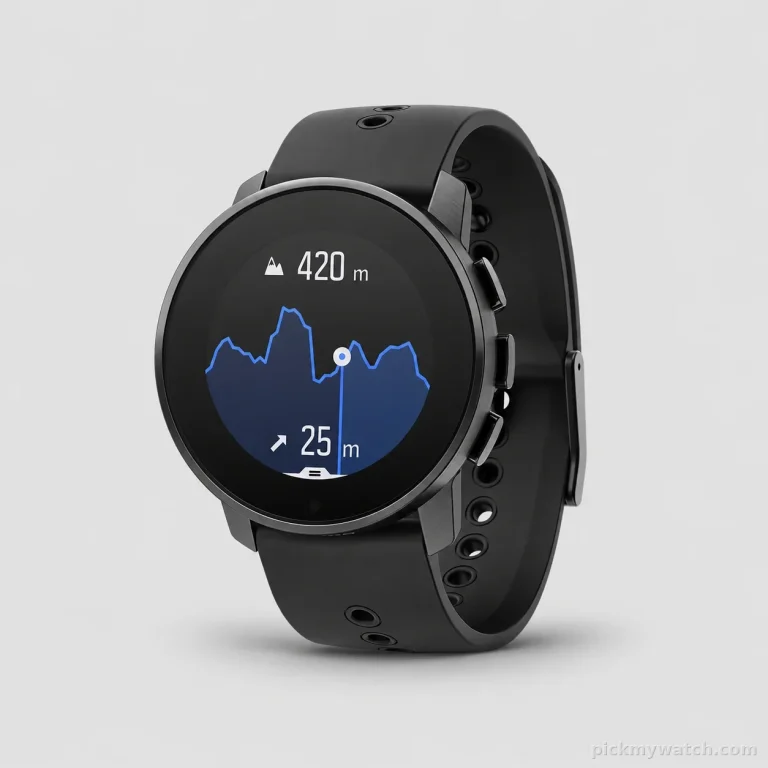
The Suunto Vertical Titanium Solar is designed for outdoor activities. It combines heart rate tracking, offline maps, a compass and a barometric altimeter. Its appeal lies in this combination for navigation and elevation information.
The Coros Vertix 2 WVTX2-SVR is another option to consider. However, its bulky design warrants a careful check before purchase.
The Xiaomi Watch S3 highlights phone calls, GPS and an AMOLED display. The Suunto 9 Peak offers a multisport focus and altitude tracking. Heart rate tracking is not explicitly documented for these 2 models in the specifications considered here. Confirm this feature before choosing them for cardio training.
Choose sports features that support your activities
For runs along your usual routes, start by checking which information you want to see during your session. GPS tracks movement; its presence does not guarantee navigation assistance. Recording a route and viewing a map serve different needs.
For outings along unfamiliar routes, the Suunto Vertical Titanium Solar's offline maps offer a tangible benefit. Its barometric altimeter will be more relevant to those covering terrain with elevation changes.
How well the available activities match your needs matters more than their number. If your search for “Best sports watch” is mainly about running, prioritise readable information and features useful to your sessions over a catalogue of sports.
Compare battery life that suits your sessions
Always distinguish between the stated battery life for everyday use and battery life with sports features active. The durations listed for the Xiaomi Watch S3, the Suunto Vertical Titanium Solar and the Coros Vertix 2 do not establish how long they will last on an extended outing with GPS.
Before choosing, look for a duration that matches your actual settings. For an extended hike, ask specifically about battery life with route recording enabled. For everyday tracking, ask which features remain active throughout the stated duration.
Solar charging on the Suunto Vertical Titanium Solar provides supplementary power, with its contribution depending on exposure conditions. Do not treat it as a guarantee of energy independence. Finally, battery capacity does not translate directly into days of use: it cannot, on its own, be used to compare these watches.
Find a size that suits your wrist and daily routine
Comfort deserves as much attention as features, especially if you want to wear the watch overnight. The Polar Ignite 2 has a stated weight of 35 g, compared with 89 g for the Coros Vertix 2. These figures help identify differences in size and weight without predicting your personal comfort.
Also check the case size and controls. The Polar combines a button with a touchscreen. For the Suunto 9 Peak, some dimensions are inconsistent or unusable: confirm the exact size of the version you are considering.
Android and iOS compatibility is explicitly mentioned for the Suunto Vertical Titanium Solar. For the other models, check compatibility with your phone and which features are available. If you are also considering a selection of “Best smartwatches”, calls and everyday features may carry more weight. Bluetooth connectivity does not guarantee every interaction you want.
Check water resistance for your activity
A stated depth rating does not mean every water activity is permitted. Check which activities the manufacturer permits for the exact model. This precaution is essential before planning swimming sessions.
The Xiaomi Watch S3 has specifications that are difficult to reconcile, with a stated depth rating alongside protection described as suitable for rain and handwashing. The Polar Ignite 2 also has a statement limited to handwashing. Ask for explicit confirmation instead of interpreting these descriptions favourably.
Which product tier suits your needs
Choose your product tier based on essential features. At entry level, first check that the heart rate tracking you need is clearly documented. A watch geared towards sports guidance may then be sufficient if your priority is to structure your activity.
The high end is easier to justify when mapping, materials or outdoor features meet a regular need. These attributes do not demonstrate greater heart rate accuracy. Without comparative measurements, no reliability ranking would be justified.
Mistakes to avoid
- Inferring heart rate accuracy from the product tier.
- Confusing everyday battery life with battery life while GPS is active.
- Choosing a large case without checking its dimensions.
- Assuming that Bluetooth connectivity guarantees pairing with a heart rate chest strap.
- Interpreting a water resistance rating as permission to swim.
Key takeaways
Start by shortlisting models with explicitly stated heart rate tracking. Then choose between them based on your activity, their size and the battery life relevant to your sessions. Any missing information about an essential feature should be confirmed before buying.
What should you know before choosing a heart rate watch?
Which heart rate watch is the most reliable?
Reliability cannot be ranked without comparative accuracy measurements. The Polar Ignite 2, Suunto Vertical Titanium Solar and Coros Vertix 2 WVTX2-SVR explicitly list heart rate tracking. This confirms a feature without establishing which is more accurate. To choose the best heart rate monitor watch, prioritise features relevant to your activities and check whether it can connect to a chest strap if you want to supplement wrist-based tracking.
What is the best smartwatch for tracking your health in 2026?
The best choice depends on the metrics you want to track, without expecting a medical diagnosis. The Polar Ignite 2 lists heart rate, activity, sleep and recovery tracking among its features. It is therefore worth considering for monitoring these trends. Searching for the “Best smartwatch” also covers broader needs. If you notice an unusual reading or experience symptoms, seek medical advice rather than relying solely on your watch screen.
What is the best heart rate monitor with a chest strap?
No specific chest strap can be recommended here without verifiable specifications and confirmed compatibility. Before choosing, check that the watch supports an external heart rate sensor and that the chest strap uses a compatible protocol. Bluetooth alone does not guarantee that they will connect. Consult the documentation for each device, then check how to start a session with the chest strap and identify the source of the recorded heart rate.
How do you determine your heart rate zones?
Your zones should reflect your profile and goal, rather than an automatically applied formula. Start by checking how your watch calculates them and whether their settings can be adjusted. Then compare the readings with your breathing and perceived exertion. To structure demanding training, a qualified professional can help you establish suitable reference points. Searching for the “Best sports watch” does not replace this personalisation.
How should you interpret sleep and recovery tracking?
These metrics are mainly useful for observing trends, rather than determining your fitness on their own. The Polar Ignite 2 lists automatic sleep and recovery tracking with Nightly Recharge. Compare the readings over time with how tired you feel, your daily routine and your training sessions. An estimated poor night's sleep alone does not mean you need to rest, just as a favourable indicator does not justify ignoring persistent fatigue.
Can you export your history when switching watch brands?
Keeping your history depends on the export and import options offered by the services involved. Before switching brands, check the available formats, which activities can be retrieved and what information is actually transferred. A recorded route and a recovery metric may not be retained in the same way. Export options are not specified for the models in this selection. Confirm this before buying if your history matters to your decision.