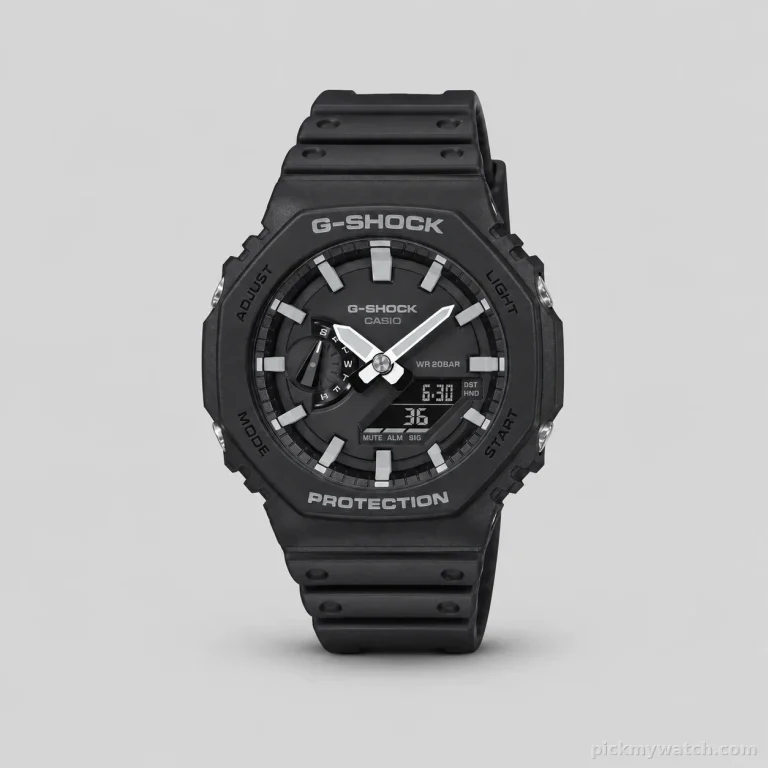
Best automatic watch 2026, picks and comparison
From entry-level to high-end models, differences in proportions, power reserve and finishing help guide your choice. Which Best automatic watch should you choose? The buying guide below helps you decide.
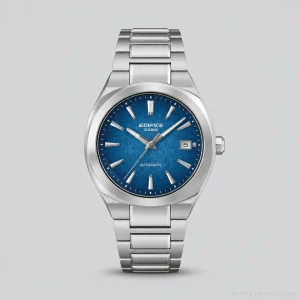
Prices recorded at retailers are for guidance only: they may have changed since. The current price is the one shown by the retailer. No price is shown for models sold exclusively on Amazon. Amounts converted from reference prices in euros using a dated exchange rate.
How we picked these models
- 1 selected model because they have the feature “Automatic” according to data published by manufacturers and retailers.
- View methodology →
- No brand pays to appear in this selection or to rank higher.
What is the best automatic watch for you?
A specific model matters more than a brand’s reputation
The best automatic watch is the one whose specifications suit how often you wear it, your aesthetic preferences and your requirements. A brand’s prestige alone cannot distinguish between models that differ in size, power reserve or functions.
A self-winding mechanical watch uses wrist movements to maintain its power reserve. Its appeal lies as much in this mechanism as in the pleasure of choosing a timepiece. It is particularly suited to someone who wants to wear their watch regularly and accepts having to reset the time after it stops. If you are mainly looking for digital functions, the “Best smartwatch” section addresses a different need.
This selection lets you explore different options without claiming to represent the entire market. The Cluse notably features a skeleton design, the IWC a chronograph function and the Omega a chronometer certification.
From entry level to high end, your budget should reflect your priorities. A higher market position does not guarantee dimensions that better suit your wrist or a power reserve sufficient for how often you wear the watch. You should also consider servicing and repair options.
A useful comparison also makes its limitations clear
Our method relies on analysing documented specifications. We do not test products. We compare verifiable details, then explain their possible implications for your choice, without making unsubstantiated claims about comfort, reliability or satisfaction.
The dimensions illustrate this approach. The Cluse has a diameter of 40 mm and a thickness of 11,6 mm, compared with 41 mm and 13 mm for the IWC, and 44,25 mm and 16,14 mm for the Omega. These differences deserve your attention, but cannot, on their own, predict how each watch will suit your wrist.
- A measurable specification allows a direct comparison, such as diameter or stated power reserve.
- An aesthetic preference, such as an attraction to a blue dial or a visible mechanism, remains personal.
- Missing information remains something to check before buying, never a quality to assume.
This distinction avoids turning an appealing specification sheet into a universal recommendation. It also helps you choose a first automatic watch with realistic expectations.
Accuracy needs evidence beyond prestige
The term “automatic movement” describes the winding mechanism. It does not certify accuracy or establish a daily rate deviation for a particular model.
Among these 3 models, only the Omega carries the designation “COSC chronometer”. This is a documented distinguishing feature, although it does not allow us to quantify its accuracy here. For the IWC, “anti-reflective sapphire” should not be interpreted as a chronometer certification. Likewise, the absence of a stated certification for the Cluse is not enough to conclude that it lacks accuracy.
To choose between these options, continue with the selection on this page: first compare their dimensions, power reserves and functions against your needs, then decide which compromises you are willing to accept.
How to choose your automatic watch with our buying guide
The best watch with an automatic movement is the one whose proportions, power reserve and requirements suit your daily life. After analysing their specifications, the 3 selected models offer distinctly different trade-offs. We do not test products: this selection compares their documented specifications without making assumptions about their comfort or long-term reliability.
Which dimensions suit your wrist?
Start by comparing the diameter, thickness and strap width. Diameter alone cannot tell you how a watch will sit on your wrist. Thickness also matters if you wear fitted sleeves.
| Model | Price | Power reserve (days) | Case material | Strap type |
|---|---|---|---|---|
| Cluse Vigoureux CW0101503004 | N/A | 1.7 days | Stainless steel | Steel |
| IWC Portugieser Chronograph IW371605 | Check with the retailer | 1.9 days | Stainless steel | Leather |
| Omega Speedmaster 311.92.44.51.01.007 | Check with the retailer | 2.5 days | Ceramic | Nylon |
The Cluse Vigoureux CW0101503004 has the smallest and thinnest case in this selection, but the widest strap. The IWC Portugieser Chronograph IW371605 has intermediate case dimensions. The Omega Speedmaster 311.92.44.51.01.007 is the largest in diameter and thickness.
To choose between these sizes, compare their measurements with those of a watch you already own. As the case length is not specified, no firm conclusion about comfort is possible. Whether you are searching for “Best watch for men” or “Best watch for women”, prioritise proportions over gender labels.
What power reserve suits your wearing habits?
The power reserve determines how long the movement can keep running without additional energy. It becomes crucial if you alternate between several watches or regularly leave yours unworn.
Omega lists the longest power reserve in the comparison, followed by IWC and then Cluse. If your main priority is extra running time while the watch is left unworn, this advantage deserves weight in your decision. If you wear it regularly, dimensions and functions may take priority.
Bear in mind: the stated power reserve assumes appropriate winding conditions. It does not guarantee the same running time after every period of wear. Check the winding procedure in the manual before relying on the full available reserve.
Which materials and strap should you choose?
The Cluse and IWC have a stainless steel case, while the Omega uses ceramic. In general, steel can scratch, while ceramic resists scratches well but remains vulnerable to impacts. These properties alone do not establish which models are the most durable.
- The Cluse’s steel bracelet: check the sizing options and care requirements.
- The IWC’s leather strap: choose it if you are willing to protect it from moisture and monitor how it ages.
- The Omega’s nylon strap: check the cleaning instructions and replacement options.
The sapphire crystal is explicitly specified for the Cluse and Omega. The IWC’s “anti-reflective sapphire” description appears in an ambiguous field: confirm the crystal material before buying. This description does not certify accuracy.
What water resistance do you need for your activities?
The IWC is rated at 3 ATM, compared with 5 ATM for the Cluse and the Omega. This difference alone does not establish suitability for any specific water activity.
Do not interpret these ratings as usable swimming depths. Before any immersion, consult the manual for the specific model and check which activities are expressly permitted. Also consider the strap: the case’s water resistance does not mean that all components can withstand the same conditions.
Do you prefer a visible movement or a chronograph?
The Cluse combines a blue dial with a skeleton design. It is the option to favour if seeing the movement is your main priority. However, check that this design meets your expectations for legibility.
The IWC offers a chronograph, a function designed to measure elapsed time. Choose it if this function genuinely interests you. For the Omega, do not infer any additional functions from its name alone.
The Omega is also the only model in this selection described as a COSC-certified chronometer. Distinguish this certification from the mere presence of an automatic movement: the latter describes the winding mechanism and does not, on its own, guarantee a particular level of accuracy.
How do you set your budget and choose between the 3 models?
Decide which market segment suits you before comparing finishes, then look into servicing and strap replacement. A higher budget does not guarantee a better match for your needs.
- Cluse Vigoureux CW0101503004: the entry-level option to consider for its skeleton design and more compact case. Its power reserve is the shortest in the group.
- IWC Portugieser Chronograph IW371605: a high-end option for those who prioritise a chronograph and a leather strap. Its water resistance requires particular attention.
- Omega Speedmaster 311.92.44.51.01.007: a high-end option for those who prioritise power reserve and COSC certification and are willing to accept a larger case.
Mistakes to avoid
- Choosing solely on brand reputation.
- Confusing an automatic movement with certified accuracy.
- Judging comfort by diameter alone.
- Assuming the stated water resistance means you can swim with it.
- Forgetting to check the warranty, return policy and maintenance support.
Key takeaways
Decide on proportions first, then power reserve and the function you need. Cluse prioritises the visible movement here, IWC the chronograph, and Omega the longest power reserve with COSC certification. Before ordering, confirm any missing details that affect your choice.
What should you know before choosing an automatic watch?
What are the benefits of an automatic watch?
An automatic watch appeals through its mechanism, which is wound by wrist movements. Its appeal lies in the pleasure of owning a mechanical object rather than seeking digital features. It also requires a willingness to make adjustments and arrange servicing. If your priorities are notifications and digital features, our “Best smartwatch” guide is a closer match for your needs.
Does an automatic watch use a battery?
No, an automatic watch runs on energy stored in a spring, with no battery powering its mechanical movement. Wrist movements help wind this spring. When the watch is left unworn, it gradually uses up its power reserve and then stops. The stated power reserve allows you to compare models, but does not guarantee the same running time in every situation, particularly if the watch is not fully wound.
Do you need to wind an automatic watch manually?
Manual winding can be useful after the watch has stopped, if the movement supports it. An automatic movement does not necessarily mean that a particular model offers this option. Check the instruction manual before operating the crown and follow the manufacturer's procedure. Do not use a winding count intended for another model, and never force the crown if you encounter unusual resistance.
How do you set an automatic watch to the correct time without damaging it?
The right approach is to follow the instruction manual for your specific model, as crown positions and precautions vary depending on the movement. Distinguish between setting the time and making any calendar adjustments, which may be subject to restrictions. Operate the crown gently, then return it to its proper position as instructed. If the watch has stopped, also check the restart procedure before setting the time.
How often should an automatic watch be serviced?
Servicing frequency depends on the manufacturer's recommendations, the movement and the conditions in which the watch is worn. There is therefore no universal interval that applies to all automatic watches. Check the instruction manual and keep records of any work carried out. Unusual timekeeping deviations, repeated stopping or condensation warrant an inspection before the next scheduled service. Water resistance checks and movement servicing address different needs.
Which documents should you check before buying a second-hand automatic watch?
Prioritise checking the purchase receipt, warranty documents and service records when available. Model references and identifiers should match the watch being offered. Also request a written description of its condition, any known work carried out and the accessories included. These documents help you assess its history, but are not enough to guarantee its authenticity or mechanical condition. If in doubt, consult an independent professional.